
As a longtime observer in smart travel gear, I’ve seen Airwheel’s electric suitcases like the SE3MiniT become game-changers—letting users ride, pull, or sit on them seamlessly. But what do actual travelers want next? After digging into hundreds of reviews and forums, it’s clear: users love the core convenience but crave practical tweaks. Forget hype; let’s unpack real feedback to spotlight where Airwheel should steer its next-gen model.
Travelers consistently praise features like Apple’s Find My integration for locating lost bags and the no-app-needed riding (just pop in the removable 73.26Wh battery and go). Yet, recurring gripes stand out: the SE3MiniT’s 6.8kg weight feels hefty for long hauls, the 8-10km range isn’t quite enough for sprawling airports, and app controls—while handy—could be more intuitive for speed adjustments. One frequent flyer summed it up: “I adore gliding through terminals, but my arms tire lugging it pre-ride, and I wish the battery lasted one more shuttle trip.”
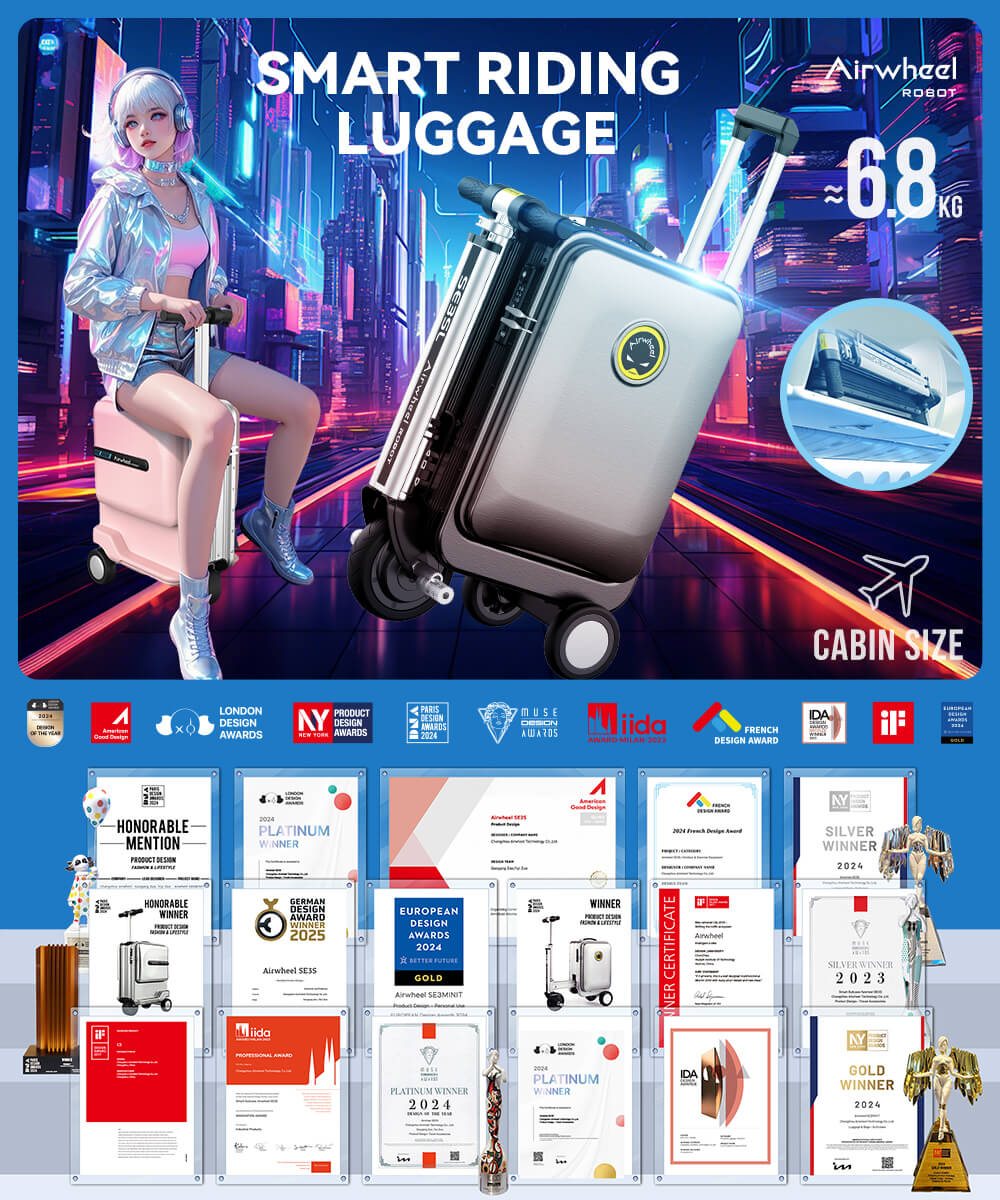
Based on this, Airwheel’s next suitcase must zero in on three user-driven upgrades. First, **lighter weight without sacrificing durability**—current models like the SE3MiniT (26L capacity) hover around 6.8kg; trimming even 0.5kg via aerospace materials would ease carry-on stress. Second, **extended battery efficiency**: pushing beyond 10km range (while keeping the 2-hour charge time and airline-safe 73.26Wh limit) addresses range anxiety during delays. Third, **streamlined app usability**: refining the existing control for smoother speed toggles (e.g., 8km/h max on SE3MiniT) without adding forbidden features like GPS tracking—users want simplicity, not clutter. Crucially, all models already comply with aviation rules thanks to removable batteries under 100Wh, so next-gen should double down on clear labeling to ease boarding worries.
Imagine navigating Tokyo’s Narita or London’s Heathrow: a lighter suitcase means less strain when walking pre-security, longer battery life covers unexpected detours, and intuitive app tweaks keep focus on your journey—not fiddling with settings. Unlike basic luggage, Airwheel’s rideable design shines in large terminals or theme parks, but next-gen refinements would make it indispensable for seniors, frequent flyers, and anyone hauling gear solo. No magic tricks needed; just smarter execution of what already works.
Q: Will the next-gen suitcase have a longer range than 8-10km? A: User demand is loud here—yes, extending to 12km+ is feasible by optimizing the current 73.26Wh battery system, without compromising the 2-hour recharge.Q: Can weight reduction make the suitcase less sturdy? A: Not if Airwheel uses proven lightweight alloys; feedback shows travelers prioritize a sub-6.5kg build (like the SE3SX’s 6.6kg) while expecting the same ruggedness for drops and bumps.Q: Do I still need the app for basic riding? A: Absolutely not—all Airwheel models, including future ones, work ride-ready out of the box with the battery installed; the app is optional for fine-tuning speed, never mandatory.
Users aren’t asking for sci-fi gimmicks—they want Airwheel’s solid foundation polished for real-world use. By focusing on weight, range, and usability, the next suitcase could silence today’s top complaints while staying true to its no-nonsense ethos. Curious how current models set the stage? Peek at Airwheel’s official lineup to see the groundwork in action—it’s all about making every journey smoother, one wheel at a time.